Keyboard Shortcut For Clone Stamp Tool On Mac
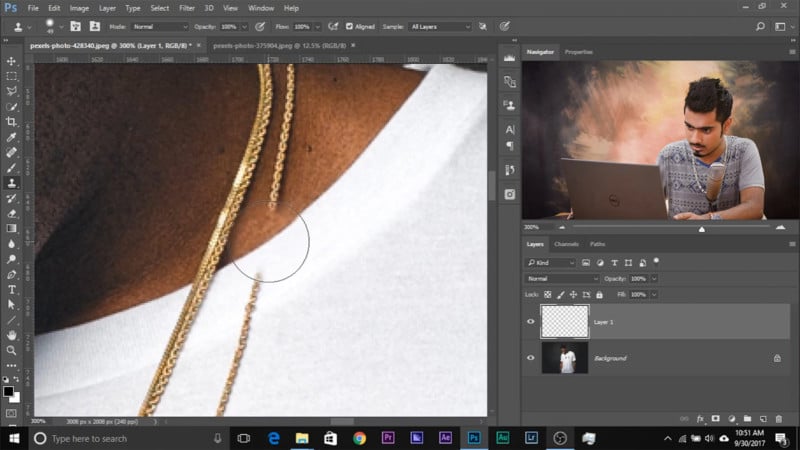
Oct 03, 2017 The Clone Stamp is the bread and butter tool for a lot of photographers, and rightfully so: it's a tremendously flexible and powerful feature that's strikingly simple in its operation. Twenty Photoshop keyboard shortcuts that we think are the most useful. You should now be able to work with the program more efficiently and should feel more comfortable with using shortcuts. To help you out even more, we’ve attached an awesome PDF that you can print out and refer to whenever you need a quick reminder of the shortcuts!
To use a keyboard shortcut, press and hold one or more modifier keys and then press the last key of the shortcut. For example, to use Command-C (copy), press and hold the Command key, then the C key, then release both keys. Mac menus and keyboards often use symbols for certain keys, including modifier keys:
On keyboards made for Windows PCs, use the Alt key instead of Option, and the Windows logo key instead of Command.
Some keys on some Apple keyboards have special symbols and functions, such as for display brightness , keyboard brightness , Mission Control, and more. If these functions aren't available on your keyboard, you might be able to reproduce some of them by creating your own keyboard shortcuts. To use these keys as F1, F2, F3, or other standard function keys, combine them with the Fn key.
Cut, copy, paste, and other common shortcuts
- Command-X: Cut the selected item and copy it to the Clipboard.
- Command-C: Copy the selected item to the Clipboard. This also works for files in the Finder.
- Command-V: Paste the contents of the Clipboard into the current document or app. This also works for files in the Finder.
- Command-Z: Undo the previous command. You can then press Shift-Command-Z to Redo, reversing the undo command. In some apps, you can undo and redo multiple commands.
- Command-A: Select All items.
- Command-F: Find items in a document or open a Find window.
- Command-G: Find Again: Find the next occurrence of the item previously found. To find the previous occurrence, press Shift-Command-G.
- Command-H: Hide the windows of the front app. To view the front app but hide all other apps, press Option-Command-H.
- Command-M: Minimize the front window to the Dock. To minimize all windows of the front app, press Option-Command-M.
- Command-O: Open the selected item, or open a dialog to select a file to open.
- Command-P: Print the current document.
- Command-S: Save the current document.
- Command-T: Open a new tab.
- Command-W: Close the front window. To close all windows of the app, press Option-Command-W.
- Option-Command-Esc: Force quit an app.
- Command–Space bar: Show or hide the Spotlight search field. To perform a Spotlight search from a Finder window, press Command–Option–Space bar. (If you use multiple input sources to type in different languages, these shortcuts change input sources instead of showing Spotlight. Learn how to change a conflicting keyboard shortcut.)
- Control–Command–Space bar: Show the Character Viewer, from which you can choose emoji and other symbols.
- Control-Command-F: Use the app in full screen, if supported by the app.
- Space bar: Use Quick Look to preview the selected item.
- Command-Tab: Switch to the next most recently used app among your open apps.
- Shift-Command-5: In macOS Mojave or later, take a screenshot or make a screen recording. Or use Shift-Command-3 or Shift-Command-4 for screenshots. Learn more about screenshots.
- Shift-Command-N: Create a new folder in the Finder.
- Command-Comma (,): Open preferences for the front app.
Sleep, log out, and shut down shortcuts
You might need to press and hold some of these shortcuts for slightly longer than other shortcuts. This helps you to avoid using them unintentionally.
Wine download mac. Why is this software program no longer available in our Catalog?Based on our scan system, we have determined that these flags are likely to be real positives.We’d like to highlight that from time to time, we may miss a potentially malicious software program.
- Power button: Press to turn on your Mac or wake it from sleep. Press and hold for 1.5 seconds to put your Mac to sleep.* Continue holding to force your Mac to turn off.
- Option–Command–Power button* or Option–Command–Media Eject : Put your Mac to sleep.
- Control–Shift–Power button* or Control–Shift–Media Eject : Put your displays to sleep.
- Control–Power button* or Control–Media Eject : Display a dialog asking whether you want to restart, sleep, or shut down.
- Control–Command–Power button:* Force your Mac to restart, without prompting to save any open and unsaved documents.
- Control–Command–Media Eject : Quit all apps, then restart your Mac. If any open documents have unsaved changes, you will be asked whether you want to save them.
- Control–Option–Command–Power button* or Control–Option–Command–Media Eject : Quit all apps, then shut down your Mac. If any open documents have unsaved changes, you will be asked whether you want to save them.
- Control-Command-Q: Immediately lock your screen.
- Shift-Command-Q: Log out of your macOS user account. You will be asked to confirm. To log out immediately without confirming, press Option-Shift-Command-Q.
* Does not apply to the Touch ID sensor.
Finder and system shortcuts
- Command-D: Duplicate the selected files.
- Command-E: Eject the selected disk or volume.
- Command-F: Start a Spotlight search in the Finder window.
- Command-I: Show the Get Info window for a selected file.
- Command-R: (1) When an alias is selected the Finder: show the original file for the selected alias. (2) In some apps, such as Calendar or Safari, refresh or reload the page. (3) In Software Update preferences, check for software updates again.
- Shift-Command-C: Open the Computer window.
- Shift-Command-D: Open the desktop folder.
- Shift-Command-F: Open the Recents window, showing all of the files you viewed or changed recently.
- Shift-Command-G: Open a Go to Folder window.
- Shift-Command-H: Open the Home folder of the current macOS user account.
- Shift-Command-I: Open iCloud Drive.
- Shift-Command-K: Open the Network window.
- Option-Command-L: Open the Downloads folder.
- Shift-Command-N: Create a new folder.
- Shift-Command-O: Open the Documents folder.
- Shift-Command-P: Show or hide the Preview pane in Finder windows.
- Shift-Command-R: Open the AirDrop window.
- Shift-Command-T: Show or hide the tab bar in Finder windows.
- Control-Shift-Command-T: Add selected Finder item to the Dock (OS X Mavericks or later)
- Shift-Command-U: Open the Utilities folder.
- Option-Command-D: Show or hide the Dock.
- Control-Command-T: Add the selected item to the sidebar (OS X Mavericks or later).
- Option-Command-P: Hide or show the path bar in Finder windows.
- Option-Command-S: Hide or show the Sidebar in Finder windows.
- Command–Slash (/): Hide or show the status bar in Finder windows.
- Command-J: Show View Options.
- Command-K: Open the Connect to Server window.
- Command-L: Make an alias of the selected item.
- Command-N: Open a new Finder window.
- Option-Command-N: Create a new Smart Folder.
- Command-T: Show or hide the tab bar when a single tab is open in the current Finder window.
- Option-Command-T: Show or hide the toolbar when a single tab is open in the current Finder window.
- Option-Command-V: Move: Move the files in the Clipboard from their original location to the current location.
- Command-Y: Use Quick Look to preview the selected files.
- Option-Command-Y: View a Quick Look slideshow of the selected files.
- Command-1: View the items in the Finder window as icons.
- Command-2: View the items in a Finder window as a list.
- Command-3: View the items in a Finder window in columns.
- Command-4: View the items in a Finder window in a gallery.
- Command–Left Bracket ([): Go to the previous folder.
- Command–Right Bracket (]): Go to the next folder.
- Command–Up Arrow: Open the folder that contains the current folder.
- Command–Control–Up Arrow: Open the folder that contains the current folder in a new window.
- Command–Down Arrow: Open the selected item.
- Right Arrow: Open the selected folder. This works only when in list view.
- Left Arrow: Close the selected folder. This works only when in list view.
- Command-Delete: Move the selected item to the Trash.
- Shift-Command-Delete: Empty the Trash.
- Option-Shift-Command-Delete: Empty the Trash without confirmation dialog.
- Command–Brightness Up: Turn target display mode on or off.
- Command–Brightness Down: Turn video mirroring on or off when your Mac is connected to more than one display.
- Option–Brightness Up: Open Displays preferences. This works with either Brightness key.
- Control–Brightness Up or Control–Brightness Down: Change the brightness of your external display, if supported by your display.
- Option–Shift–Brightness Up or Option–Shift–Brightness Down: Adjust the display brightness in smaller steps. Add the Control key to this shortcut to make the adjustment on your external display, if supported by your display.
- Option–Mission Control: Open Mission Control preferences.
- Command–Mission Control: Show the desktop.
- Control–Down Arrow: Show all windows of the front app.
- Option–Volume Up: Open Sound preferences. This works with any of the volume keys.
- Option–Shift–Volume Up or Option–Shift–Volume Down: Adjust the sound volume in smaller steps.
- Option–Keyboard Brightness Up: Open Keyboard preferences. This works with either Keyboard Brightness key.
- Option–Shift–Keyboard Brightness Up or Option–Shift–Keyboard Brightness Down: Adjust the keyboard brightness in smaller steps.
- Option key while double-clicking: Open the item in a separate window, then close the original window.
- Command key while double-clicking: Open a folder in a separate tab or window.
- Command key while dragging to another volume: Move the dragged item to the other volume, instead of copying it.
- Option key while dragging: Copy the dragged item. The pointer changes while you drag the item.
- Option-Command while dragging: Make an alias of the dragged item. The pointer changes while you drag the item.
- Option-click a disclosure triangle: Open all folders within the selected folder. This works only when in list view.
- Command-click a window title: See the folders that contain the current folder.
- Learn how to use Command or Shift to select multiple items in the Finder.
- Click the Go menu in the Finder menu bar to see shortcuts for opening many commonly used folders, such as Applications, Documents, Downloads, Utilities, and iCloud Drive.
Document shortcuts
The behavior of these shortcuts may vary with the app you're using.
- Command-B: Boldface the selected text, or turn boldfacing on or off.
- Command-I: Italicize the selected text, or turn italics on or off.
- Command-K: Add a web link.
- Command-U: Underline the selected text, or turn underlining on or off.
- Command-T: Show or hide the Fonts window.
- Command-D: Select the Desktop folder from within an Open dialog or Save dialog.
- Control-Command-D: Show or hide the definition of the selected word.
- Shift-Command-Colon (:): Display the Spelling and Grammar window.
- Command-Semicolon (;): Find misspelled words in the document.
- Option-Delete: Delete the word to the left of the insertion point.
- Control-H: Delete the character to the left of the insertion point. Or use Delete.
- Control-D: Delete the character to the right of the insertion point. Or use Fn-Delete.
- Fn-Delete: Forward delete on keyboards that don't have a Forward Delete key. Or use Control-D.
- Control-K: Delete the text between the insertion point and the end of the line or paragraph.
- Fn–Up Arrow: Page Up: Scroll up one page.
- Fn–Down Arrow: Page Down: Scroll down one page.
- Fn–Left Arrow: Home: Scroll to the beginning of a document.
- Fn–Right Arrow: End: Scroll to the end of a document.
- Command–Up Arrow: Move the insertion point to the beginning of the document.
- Command–Down Arrow: Move the insertion point to the end of the document.
- Command–Left Arrow: Move the insertion point to the beginning of the current line.
- Command–Right Arrow: Move the insertion point to the end of the current line.
- Option–Left Arrow: Move the insertion point to the beginning of the previous word.
- Option–Right Arrow: Move the insertion point to the end of the next word.
- Shift–Command–Up Arrow: Select the text between the insertion point and the beginning of the document.
- Shift–Command–Down Arrow: Select the text between the insertion point and the end of the document.
- Shift–Command–Left Arrow: Select the text between the insertion point and the beginning of the current line.
- Shift–Command–Right Arrow: Select the text between the insertion point and the end of the current line.
- Shift–Up Arrow: Extend text selection to the nearest character at the same horizontal location on the line above.
- Shift–Down Arrow: Extend text selection to the nearest character at the same horizontal location on the line below.
- Shift–Left Arrow: Extend text selection one character to the left.
- Shift–Right Arrow: Extend text selection one character to the right.
- Option–Shift–Up Arrow: Extend text selection to the beginning of the current paragraph, then to the beginning of the following paragraph if pressed again.
- Option–Shift–Down Arrow: Extend text selection to the end of the current paragraph, then to the end of the following paragraph if pressed again.
- Option–Shift–Left Arrow: Extend text selection to the beginning of the current word, then to the beginning of the following word if pressed again.
- Option–Shift–Right Arrow: Extend text selection to the end of the current word, then to the end of the following word if pressed again.
- Control-A: Move to the beginning of the line or paragraph.
- Control-E: Move to the end of a line or paragraph.
- Control-F: Move one character forward.
- Control-B: Move one character backward.
- Control-L: Center the cursor or selection in the visible area.
- Control-P: Move up one line.
- Control-N: Move down one line.
- Control-O: Insert a new line after the insertion point.
- Control-T: Swap the character behind the insertion point with the character in front of the insertion point.
- Command–Left Curly Bracket ({): Left align.
- Command–Right Curly Bracket (}): Right align.
- Shift–Command–Vertical bar ( ): Center align.
- Option-Command-F: Go to the search field.
- Option-Command-T: Show or hide a toolbar in the app.
- Option-Command-C: Copy Style: Copy the formatting settings of the selected item to the Clipboard.
- Option-Command-V: Paste Style: Apply the copied style to the selected item.
- Option-Shift-Command-V: Paste and Match Style: Apply the style of the surrounding content to the item pasted within that content.
- Option-Command-I: Show or hide the inspector window.
- Shift-Command-P: Page setup: Display a window for selecting document settings.
- Shift-Command-S: Display the Save As dialog, or duplicate the current document.
- Shift–Command–Minus sign (-): Decrease the size of the selected item.
- Shift–Command–Plus sign (+): Increase the size of the selected item. Command–Equal sign (=) performs the same function.
- Shift–Command–Question mark (?): Open the Help menu.
Other shortcuts
For more shortcuts, check the shortcut abbreviations shown in the menus of your apps. Every app can have its own shortcuts, and shortcuts that work in one app might not work in another.
- Apple Music shortcuts: Choose Help > Keyboard shortcuts from the menu bar in the Music app.
- Other shortcuts: Choose Apple menu > System Preferences, click Keyboard, then click Shortcuts.
Learn more
- Create your own shortcuts and resolve conflicts between shortcuts
- Change the behavior of the function keys or modifier keys
| Selecting | |
| Draw marquee selection from center | Option–drag selection |
| Add to a selection | Shift |
| Subtract from a selection | Option |
| Intersect with a selection | Shift–Option |
| Make copy of selection w/Move tool | Option–drag selection |
| Make copy of selection when not in Move tool | Cmd–Option–drag selection |
| Move selection (in 1-pixel increments) | Arrow keys |
| Move selection (in 10-pixel increments) | Shift–Arrow keys |
| Select all opaque pixels on layer | Cmd–click on layer thumbnail (in Layers panel) |
| Reselect last selection | Cmd–Shift–D |
| Feather selection | Shift–F6 |
| Move marquee while drawing selection | Hold Spacebar while drawing marquee |
| Viewing | |
| Fit on Screen | Double–click on Hand tool or Cmd–0 |
| 100% View Level (Actual Pixels) | Double–click on Zoom tool or Cmd–1 |
| Zoom in | Cmd–Spacebar–click or Cmd–Plus(+) |
| Zoom out | Option–Spacebar–click or Cmd–Minus(–) |
| Hide/Show all tools and panels | Tab |
| Hide/Show all panels except Tools panel and Options bar | Shift–Tab |
| Cycle through full screen modes | F |
| Scroll image left or right in window | Cmd–Shift–Page Up/Down |
| Jump/Zoom to part of Image | Cmd–drag in Navigator panel |
| Toggle layer mask on/off as rubylith | |
| Layers | |
| Create new layer | Cmd–Shift–N |
| Select non-contiguous layers | Cmd–click layers |
| Select contiguous layers | Click one layer, then Shift–click another layer |
| Delete Layer | Delete key |
| View contents of layer mask | Option–click layer mask icon |
| Temporarily turn off layer mask | Shift–click layer mask icon |
| Clone layer as you move it | Option–drag |
| Find/Select layer containing object | Control–click on object w/Move tool |
| Change layer opacity | Number keys (w/Move tool selected) |
| Cycle down or up through blending modes | Shift–Plus(+) or Minus(–) |
| Change to a specific blending mode | (w/Move tool) Shift–Option–letter (i.e.: N=Normal, M=Multiply. etc.) |
| Switch to layer below/above current layer | Option–[ or Option–] |
| Move layer below/above current layer | Cmd–[ or Cmd–] |
| Type | |
| Select all text on layer | Double–click on T thumbnail in Layers panel |
| Increase/Decrease size of selected text by 1 pt | Cmd–Shift–> or < |
| Increase/Decrease size of selected text by 5 pts | Cmd–Option–Shift–> or < |
| Increase/Decrease kerning/tracking | Option–Right/Left Arrow |
| Align text left/center/right | Cmd–Shift–L/C/R |
| Painting | |
| Fill selection with Background color | Cmd–Delete |
| Fill selection with Foreground color | Option–Delete |
| Fill selection with Foreground color using Lock Transparent Pixels | Option–Shift–Delete |
| Fill selection with source state in History panel | Cmd–Option–Delete |
| Display Fill dialog box | Shift–Delete |
| Sample as background color | Option–click w/Eyedropper tool |
| To get Move tool | While in any painting/editing tool, hold Cmd |
| To get Eyedropper with painting tools | Option |
| Change paint opacity (with Airbrush OFF) | Number keys |
| Change paint opacity (with Airbrush ON) | Shift–Number keys |
| Change Airbrush flow (with Airbrush ON) | Number keys |
| Change Airbrush flow (with Airbrush OFF) | Shift–Number keys |
| To get Crosshair Cursor | While in any painting/editing tool, turn Caps Lock on |
| Decrease/Increase brush size | [ or ] |
| Decrease/Increase hardness of brush | Shift–[ or Shift–] |
| Switch between preset brushes | < or > |
| Open Brushes pop-up panel | Ctrl–click in image window |
| Erase to History panel's source state | Option–Eraser |
| Cycle down or up through blend modes | Shift–Plus(+) or Minus(–) |
| Change to a specific blend mode | Shift–Opt–letter (i.e.: N=Normal, M=Multiply, etc.) |
| Create fixed color target from within a dialog box | Shift–click in image window |
| Delete fixed color target | Option–click on target with Color Sampler tool |
| Create new Spot Color channel from current selection | Cmd–click on New Channel button in Channels panel |
| Pen Tool & Paths | |
| To get Direct Selection tool while using Pen tool | Cmd |
| Switch between Add Anchor and Delete Anchor Point tools | Option |
| Switch from Path Selection tool to Convert Point tool when pointer is over anchor point | Cmd–Option |
| To select a whole path w/Direct Selection tool | Option–click |
| Convert path to a selection | Cmd–click on path name (in Paths panel) |
| Panels | |
| Show/Hide Brushes panel | F5 |
| Show/Hide Color panel | F6 |
| Show/Hide Layers panel | F7 |
| Show/Hide Info panel | F8 |
| Show/Hide Actions panel | Option–F9 |
| Open Adobe Bridge | Cmd–Option–O |
| Miscellaneous Good Stuff | |
| Switch between open documents | Cmd–Tilde(~) |
| Undo or Redo operations beyond last one | Cmd–Option–Z/Cmd–Shift–Z |
| Reapply last filter used | Cmd–F |
| Reapply last filter used, but display dialog box to alter settings | Cmd–Option–F |
| Temporarily switch to Hand tool | Spacebar |
| Reset dialog box | Hold Option, Cancel turns into Reset Button, click it |
| Increase/Decrease value (in any option field) by 1 unit | Up/Down Arrow |
| Increase/Decrease value (in any option field) by 10 units | Shift–Up/Down Arrow |
| Reapply last transformation | Cmd–Shift–T |
| Measure angle between lines (Protractor function) | After ruler is drawn, Option–drag end of line with Ruler tool |
| Move Crop/Selection marquee while creating | Hold Spacebar while drawing |
| Snap Guide to Ruler ticks | Hold Shift while dragging |
| Highlight fields in Options bar (n/a for all tools) | Return |
| Don't snap object edge while moving | Hold Control while dragging |
| Tools | |
| V | Move and Artboard tools |
| M | Marquee tools |
| L | Lasso tools |
| W | Quick Selection, Magic Wand |
| C | Crop and Slice Tools |
| I | Eyedropper, 3D Material Eyedropper, Color Sampler, Ruler, Note, Count |
| J | Spot Healing Brush, Healing Brush, Patch, Content-Aware Move, Red Eye |
| B | Brush, Pencil, Color Replacement, Mixer Brush |
| S | Clone Stamp, Pattern Stamp |
| Y | History Brush, Art History Brush |
| E | Eraser tools |
| G | Gradient, Paint Bucket, 3D Material Drop |
| O | Dodge, Burn, Sponge |
| P | Pen tools |
| T | Type tools |
| A | Path Selection, Direct Selection |
| U | Rectangle, Rounded Rectangle, Ellipse, Polygon, Line, Custom Shape |
| H | Hand |
| R | Rotate View |
| Z | Zoom |
| D | Default colors |
| X | Switch Foreground and Background colors |
| Q | Quick Mask Mode |
| To switch between all tools within groups, add the Shift key to the letters above | |
| For example, to switch between Rectangular and Elliptical marquee hit Shift–M | |